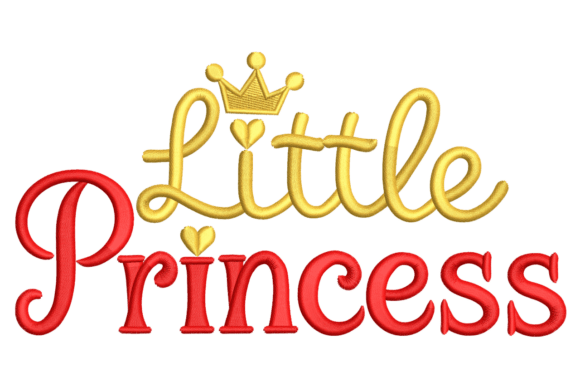
Little Princess Embroidery Design Review
As an experienced embroidery designer, I spend a significant portion of my day evaluating digital assets for commercial viability. When I first encountered the Little Princess machine embroidery design, my initial reaction was not just about aesthetics, but about its potential application in real-world small business merchandising. The description highlights that this design is "easy to stitch and full of personality," which immediately signals its suitability for high-volume production where efficiency meets charm. For Etsy sellers, boutique owners, and apparel decorators, finding designs that balance simplicity with distinct character is crucial. This review breaks down how Little Princess performs as a branded patch, a uniform accent, or a standalone product feature.
First Impressions: Personality Meets Professionalism
The title Little Princess suggests a playful, perhaps slightly regal or whimsical tone. However, the description’s emphasis on being "perfect for t-shirts, tote bags, or decorative fabric pieces" indicates a versatility that transcends simple decoration. In my experience, designs labeled with such specific themes often risk looking too juvenile if not executed with clean lines. Fortunately, the note that it is "easy to stitch" implies a lower stitch count and fewer complex transitions, which usually results in a cleaner, more professional finish.
Visually, I imagine this design leaning towards a modern yet classic aesthetic. It feels friendly and approachable, making it ideal for brands targeting families, children’s boutiques, or creative studios that want to evoke warmth. It does not feel overly rustic or heavily detailed, which is a relief. High-detail designs often struggle on small merchandise items like caps or aprons, but a design described as having "personality" without complexity suggests bold shapes and clear visual hierarchy. This makes it an excellent candidate for brand identity reinforcement, where clarity at a glance is paramount.
Real-World Business Applications
Let’s look at how Little Princess translates from a digital file to a tangible product. For small business owners, the ability to repurpose a single design across multiple product lines is key to profitability.
- Embroidered Patches: One of the most lucrative uses for this design would be as an embroidered patch. Because it is easy to stitch, it likely has a stable structure that holds up well when cut out and backed with iron-on or sew-on adhesive. These patches can serve as premium add-ons for denim jackets, backpacks, or plain tote bags, allowing customers to customize their purchases.
- Staff Uniforms and Aprons: For a local café, bakery, or florist, branding needs to be consistent but not overwhelming. Placing Little Princess on the chest of a work shirt or the pocket of an apron adds a touch of personality without distracting from the service. It helps humanize the brand, making staff appear approachable and the business feel community-oriented.
- Caps and Hats: Cap embroidery requires designs that are compact and legible from a distance. If the stitch density is moderate, this design could work beautifully on the front panel of baseball caps or beanies. It serves as a subtle logo mark that reinforces brand recognition during events or daily wear.
- Tote Bags and Packaging Accents: A tote bag design doesn’t need to cover the entire surface. A small, well-placed embroidery of Little Princess on the corner of a canvas tote elevates the perceived value of the item. It transforms a generic bag into a branded asset that customers are happy to carry around, effectively turning them into walking billboards.
- Custom Apparel and Event Merch: For craft fairs, pop-up shops, or seasonal events, quick-to-stitch designs are essential. This file allows for rapid production of custom apparel, enabling businesses to meet demand during peak seasons without sacrificing quality.
Strategic Considerations and Limitations
While the potential is high, every designer knows that context is everything. There are specific scenarios where Little Princess might require careful handling or might not be the best choice.
Small Patch Sizes: If you plan to scale this design down significantly for tiny labels or miniature accessories, you must test it thoroughly. Designs with fine details can become muddy or lose definition when stitched too small. Ensure that the core elements of the princess theme remain recognizable even at reduced scales.
Curved Surfaces and Caps: Embroidering on curved surfaces like cap fronts can distort straight lines. While this design appears simple, any intricate outlines might warp if the hoop tension isn’t perfect. Always test on the actual product material before committing to bulk orders.
Fabric Texture and Color Contrast: The success of any embroidery relies heavily on thread colors against the fabric background. On dark uniforms or textured fabrics like heavy denim or fleece, lighter thread colors may get lost. Conversely, very light threads on white fabric might lack contrast. I recommend creating a printable mockup or stitching a sample on your actual target fabric to verify visibility.
High Stitch Density Areas: Although described as easy to stitch, if the design includes dense fill areas, it may create a stiff hand-feel on soft t-shirts. For apparel that needs to remain comfortable and drape well, check that the stitch density is appropriate for lightweight knits.
Impact on Brand Identity and Customer Trust
In the world of handmade products and small business merch, presentation is everything. A professionally executed embroidery design signals attention to detail. When a customer sees Little Princess stitched cleanly on a tote bag or apron, it communicates that the brand cares about quality. This builds customer trust and enhances product value.
Furthermore, consistency in design assets helps with brand recognition. If you use Little Princess across your website, social media graphics, and physical products, you create a cohesive visual language. Customers begin to associate that specific style and personality with your brand, leading to higher engagement and repeat business. It moves beyond being just a decoration; it becomes part of your brand story.
Practical Designer Notes for Production
Before integrating this digital embroidery file into your production line, follow these practical steps to ensure success:
- Test in Black and White: Print the design layout in black and white to check spacing and balance. This helps identify any cluttered areas that might cause stitching issues.
- Check Hoop Size: Confirm the required hoop size matches your machine’s capabilities and the dimensions of your final product. You don’t want to be limited by a large hoop requirement if you’re working on small accessories.
- Use Proper Stabilizer: The choice of stabilizer (cut-away vs. tear-away) depends on the fabric. For stretchy t-shirts or delicate totes, a cut-away stabilizer provides better long-term stability.
- Thread Color Contrast: Select thread colors that pop against your chosen fabric. Don’t rely solely on the digital preview; actual thread sheen and color depth can vary.
- Commercial Licensing: Most importantly, confirm commercial licensing terms. Ensure you have the right to sell finished goods made with this design. This protects your business from legal issues and respects the creator’s rights.
- Create a Mockup: Use a printable mockup to show clients or stakeholders how the design will look on the final product before committing to mass production.
In conclusion, Little Princess appears to be a versatile, user-friendly design asset that offers strong potential for small business applications. Its ease of stitching and charming personality make it suitable for a wide range of products, from embroidered patches to custom apparel. By carefully considering fabric choices, sizing, and licensing, you can leverage this design to enhance your brand identity and create memorable, high-quality products for your customers.