Butterfly Border – Cute Pink Design Review
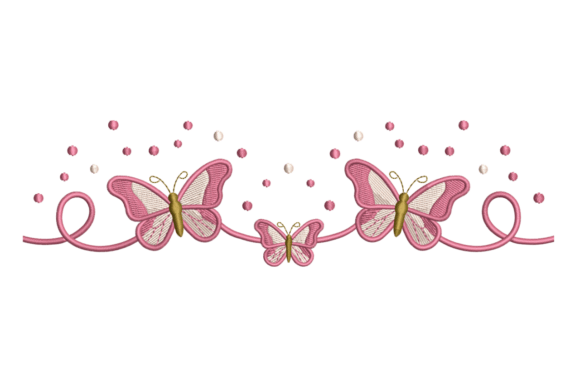
As an embroidery designer who has spent years translating digital concepts into tangible, stitched reality for small businesses, I approach every new file with a critical eye. It is not enough for a design to simply look good on a screen; it must hold up under the tension of machine needles, thread friction, and the daily wear and tear that branded merchandise endures. Today, I am reviewing Butterfly Border – Cute Pink, a design categorized under Bugs Insects within the Embroidery niche. This review focuses specifically on its viability for commercial application, from custom apparel to high-end embroidered patches.
First Impressions: Whimsy Meets Professional Polish
The title Butterfly Border – Cute Pink immediately sets expectations. The accompanying description highlights a "delicate and whimsical flourish" featuring a decorative pink thread motif. When I first loaded this digital embroidery file into my hoop, the visual impact was immediate. It strikes a balance between playful charm and refined elegance. For brands targeting a feminine, soft, or nature-inspired aesthetic—such as boutiques, bakeries, florists, or handmade gift shops—this design offers an instant upgrade in perceived value.
The color palette, dominated by soft pinks, suggests a friendly and approachable brand identity. However, the border format provides structure. Unlike a standalone logo that might feel isolated, a border design frames content, creating a sense of completeness and premium packaging. It feels less like a cheap sticker and more like a bespoke detail found on luxury goods. This is crucial for small business owners looking to justify higher price points through superior presentation.
Real-World Business Applications
In my studio, I frequently test designs across various substrates to determine their commercial potential. Here is how Butterfly Border – Cute Pink performs in real-world scenarios:
- Embroidered Patches: This design excels as a patch element. The linear nature of a border allows it to wrap around the edge of a circular or shield-shaped patch, framing a central logo without cluttering it. It adds a layer of sophistication that makes the patch feel like a collectible item rather than just a utility piece.
- Apron Embroidery: For café owners, bakers, or crafters, aprons are walking billboards. Placing this border along the hem or the bib of a white or neutral-colored apron creates a striking contrast. It elevates staff uniforms from generic workwear to branded team attire, fostering a sense of pride and professionalism among employees.
- Tote Bag Design: Canvas tote bags are staples for Etsy sellers and market vendors. A subtle butterfly border running vertically down the side or horizontally across the bottom pocket adds a touch of whimsy without overwhelming the bag’s functionality. It turns a simple canvas tote into a fashionable accessory that customers want to carry beyond the shop.
- Cap Embroidery: While cap fronts have limited space, this border can be adapted for the brim or the back strap area. It works beautifully as a secondary accent on hats that already feature a primary logo, reinforcing brand recognition through repetition of style elements.
- Product Packaging Accents: Beyond fabric, this design assets can be used for printable mockups or direct-to-film transfers on rigid packaging boxes. The delicate lines translate well to smaller scales, making it ideal for sealing wax seals or box lids where a final touch of polish is needed.
Strategic Considerations and Limitations
No design is perfect for every application. As a professional, I must advise caution in specific use cases to ensure customer satisfaction and reduce remake rates.
Small Patch Sizes: If you plan to digitize this into a very small patch (under 2 inches), the delicate details may merge. At tiny scales, fine lines can bleed together, losing the "whimsical" definition. Always test at the actual production size before committing to bulk orders.
Curved Surfaces: Embroidering borders on curved surfaces like caps or rounded sleeves requires precise hooping and stabilizer support. Without proper tension control, the border may pucker or distort, ruining the clean lines that make this design attractive.
Dark Uniforms: The pink thread colors may lack sufficient contrast against dark navy, black, or charcoal fabrics. On dark backgrounds, the design might appear muddy or disappear entirely. For these applications, consider using a lighter background fabric or opting for a high-contrast thread palette if the file allows customization.
High Stitch Density: Check the stitch density of the original file. If the butterfly motifs are too dense, they may create a stiff, plastic-like texture on lightweight fabrics like silk or thin cotton blends. This can compromise the comfort of wearable items like t-shirts or light jackets.
Impact on Brand Identity and Customer Trust
Visual consistency is the backbone of brand trust. Using a cohesive design language across your product line signals professionalism. Butterfly Border – Cute Pink contributes to a brand identity that values detail, care, and aesthetic harmony. When a customer sees this border on a tote bag, a hat, and a product tag, it reinforces the idea that the business pays attention to the little things.
This level of detail enhances perceived product value. Customers often associate high-quality embroidery with durability and craftsmanship. By incorporating such a refined design element, you subtly communicate that your products are made with intention, which can increase customer loyalty and engagement. It transforms a transactional relationship into an emotional connection based on shared appreciation for beauty.
Practical Designer Notes for Production
Before integrating this design into your commercial workflow, follow these essential steps:
- Test in Black and White: Convert the design to monochrome to check the balance of positive and negative space. If the design looks cluttered or unbalanced in grayscale, it will likely struggle in color as well.
- Check Hoop Size: Confirm the maximum dimensions of the digital embroidery file. Ensure it fits comfortably within your standard hoop sizes to avoid unnecessary trimming or re-hooping, which can misalign the stitching.
- Review Thread Color Contrast: Physically stitch out the design using the intended thread colors on the actual fabric type. Screen colors can be deceptive; what looks vibrant digitally may appear dull in person.
- Inspect Spacing: Zoom in on the digitization. Are there any gaps where the fabric shows through unintentionally? Is the spacing between butterflies even? Consistency is key to a premium finish.
- Use Proper Stabilizer: Delicate designs require stable foundations. Use cut-away stabilizer for stretchy knits and tear-away for wovens, ensuring the fabric does not shift during the embroidery process.
- Create a Printable Mockup: Before producing physical samples, generate a high-resolution printable mockup. Show this to potential clients or stakeholders for approval to ensure the scale and placement meet their vision.
- Confirm Commercial Licensing: Verify the licensing terms of the digital embroidery file. Ensure you have the right to sell finished goods created with this design, especially if you are operating at a large scale.
By carefully evaluating Butterfly Border – Cute Pink through these practical lenses, you can leverage its aesthetic appeal to enhance your small business merch and branded assets. It is a versatile tool that, when used correctly, can significantly elevate the perceived quality of your handmade products and custom apparel.